
Computer Programming Pioneer Grace Hopper: 10 Notable Moments
Grace Brewster Murray Hopper stands as one of the most influential figures in computing history. Born on 9th December 1906 in New York City, this extraordinary woman would go on to revolutionise the way humans interact with computers and leave an indelible mark on technology that continues to resonate today. As both a brilliant mathematician and a dedicated naval officer, computer programming pioneer Grace Hopper’s contributions span multiple domains, making her story one of incredible achievement and perseverance. Let’s explore 10 notable moments that defined her remarkable career and lasting legacy.
1. Educational Excellence: Yale PhD Achievement
Before becoming a computer programming pioneer, Grace Murray displayed exceptional aptitude for mathematics and logical thinking from an early age. Her curiosity about how things worked manifested when she dismantled seven alarm clocks in her home to understand their inner workings when she was just seven years old. This natural inclination toward mechanical understanding would later serve her well in her computing career.
A truly notable moment in Hopper’s life came in 1934, when she completed her PhD in mathematics at Yale University, studying under the renowned mathematician Øystein Ore. This achievement was remarkable for a woman of her era, as very few women pursued advanced degrees in mathematics during this period. Her doctoral thesis, “New Types of Irreducibility Criteria,” showcased her exceptional mathematical talents and laid the groundwork for her future innovations.
After completing her doctorate, Hopper returned to Vassar College as a mathematics professor, where she taught for the next decade. This period honed her ability to explain complex concepts clearly and methodically – a skill that would become invaluable later in her computing career when communicating technical concepts to diverse audiences.
2. Answering the Call: Joining the U.S. Naval Reserve
When World War II erupted, a pivotal moment occurred in December 1943 when Hopper was sworn into the U.S. Naval Reserve. Despite being 34 years old and slightly under the Navy’s weight requirements, she persisted in her efforts to join, demonstrating the determination that would characterise her entire career. This decision would profoundly shape her future and create opportunities that might otherwise never have materialised.
Hopper’s mathematical background led to her assignment at Harvard University, where she joined the Harvard Mark I team under the direction of Howard Aiken. The Mark I was one of the first large-scale digital computers, and Hopper’s role was to programme this massive machine for the war effort. She quickly became proficient at programming the Mark I, writing code for solving complex mathematical problems that supported the Navy’s operations.
As one of the first programmers of the Mark I, Hopper co-authored the 500-page manual for the machine, “A Manual of Operation for the Automatic Sequence Controlled Calculator,” which is considered the first computer programming manual ever written. Her work during this period established her as one of the earliest computer programmers and set the stage for her future innovations.
3. The First Computer Bug: A Historic Moment in Debugging
In 1947, while working on the Mark II computer at Harvard, a memorable moment occurred that would become legendary in computing folklore. Hopper and her team encountered a malfunction in the system. Upon investigation, they discovered that a moth had become trapped in one of the relays, causing the system to fail. Hopper recorded this incident in her logbook, noting they had “debugged” the computer by removing the moth.
This incident has become iconic in computer debugging history. The actual moth was taped into the logbook with the notation “First actual case of bug being found.” This logbook, with the moth still taped to the page, is preserved at the Smithsonian Institution’s National Museum of American History, serving as a tangible reminder of this pivotal moment in computing history.
While computer programming pioneer Grace Hopper didn’t coin the term “debugging” (it was already in use in engineering), this incident popularised the term in computing. The concept of debugging – identifying and removing errors from computer programmes – became a fundamental aspect of software development. Hopper’s methodical approach to troubleshooting and her documentation of the process helped establish debugging as an essential practice in programming, one that continues to be vital in software development today.
4. Creating the First Compiler: A Computing Breakthrough
After her work at Harvard, Hopper joined the Eckert-Mauchly Computer Corporation in 1949, which was later acquired by Remington Rand. A truly groundbreaking moment in her career came in 1952 when she completed the A-0 compiler – the first computer compiler ever created.
This innovation represented a fundamental shift in how humans interacted with computers. A compiler is a programme that translates human-readable programming instructions into the machine code that computers can execute. Before Hopper’s innovation, programmers had to write code in machine language, which consisted of binary or hexadecimal instructions specific to a particular computer’s hardware. This process was tedious, error-prone and required extensive knowledge of the computer’s architecture.
Hopper believed that programming could be more accessible if it resembled human language rather than machine code. The A-0 compiler allowed programmers to write code using English-like statements that the compiler would then translate into machine language. This was a revolutionary concept that fundamentally changed how people interacted with computers and laid the groundwork for the development of higher-level programming languages that would make computing more accessible to a broader range of users.
5. COBOL Development: Revolutionising Business Computing
Building on her compiler work, one of Hopper’s most significant moments came in 1959 when she played a crucial role in developing the COBOL programming language as a technical consultant to the Conference on Data Systems Languages (CODASYL).
COBOL (Common Business-Oriented Language) represented the realisation of Hopper’s vision for a programming language that used English-like statements rather than mathematical notation or machine code. It was designed specifically for business applications, focusing on data processing tasks common in commercial settings.
The COBOL programming language quickly became the standard for business applications, driving the computerisation of businesses worldwide. Its readability and focus on data processing made it ideal for financial systems, inventory management and other business operations. By the 1970s, COBOL had become the most widely used programming language in the world for business applications.
What made COBOL truly revolutionary was its portability – programmes written in COBOL could run on different types of computers with minimal modifications. This was a significant advancement at a time when most programmes were written specifically for a particular machine. Hopper had championed the concept of machine-independent languages, and COBOL embodied this principle. Even today, COBOL continues to be used in many legacy systems, particularly in banking, insurance and government applications.
6. Retirement and Recall: Unprecedented Naval Return
In a remarkable moment that demonstrated her unique value to the military, Hopper was recalled to active duty in 1967, just seven months after being forced to retire from the Navy due to age restrictions. This exceptional circumstance – being brought back after mandatory retirement – underscored how vital her computing expertise was considered to national interests.
Upon her return, Hopper directed the Navy Programming Languages Group and led efforts to implement standards for testing computer systems and components. Her naval computing contributions were significant, particularly in standardising computer systems across the U.S. Navy. She recognised that standardisation was crucial for military operations, where compatibility between systems could be a matter of life and death.
Under her leadership, the Navy developed the Navy Standard COBOL, a version of the language specifically adapted for naval applications. This standardised approach improved efficiency, reduced costs and enhanced operational capabilities across the fleet. Her work laid the groundwork for the sophisticated integrated computer systems that power naval operations today.
Hopper also played a key role in developing validation software for COBOL compilers, ensuring that programmes would run consistently across different hardware platforms. Her dual expertise in both computing and naval operations made her uniquely qualified to bridge these two worlds, understanding both the technical requirements of computing systems and the operational needs of naval forces.
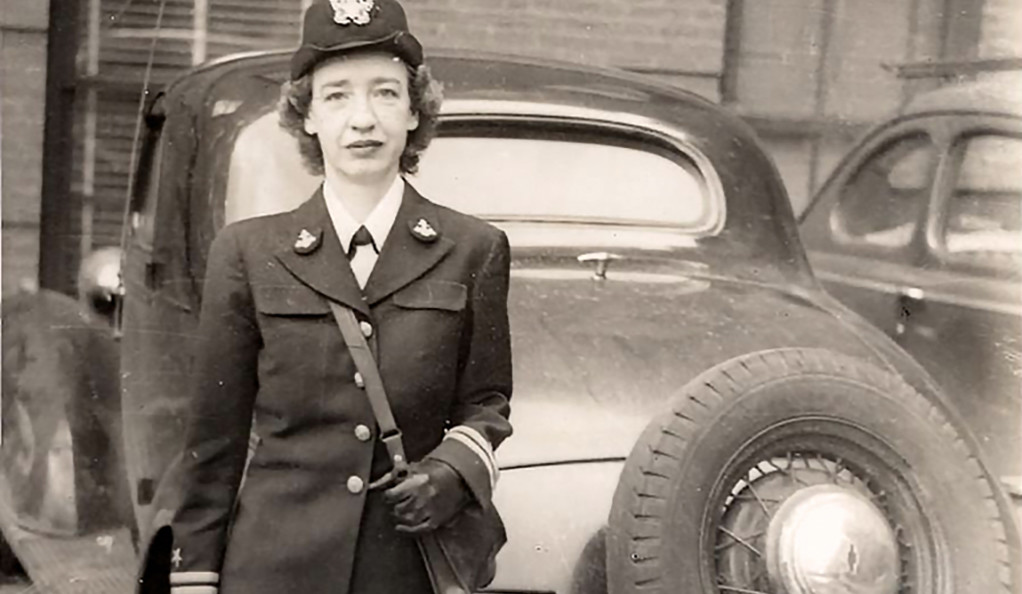
7. Promotion to Rear Admiral: Breaking the Glass Ceiling
A historic moment in both Hopper’s career and in military history occurred in 1985 when she was promoted to the rank of US Navy rear admiral, making her one of the first women to achieve this rank. This promotion came at the age of 79, adding to the remarkable nature of the achievement.
At the time of her retirement in 1986, she was the oldest active-duty commissioned officer in the United States Navy. Her remarkable 43-year naval career spanned from World War II through the computer revolution, representing an extraordinary period of service to her country.
Throughout her time as a US Navy rear admiral, Hopper used her position to advocate for standardisation in computer systems and languages. She understood the strategic importance of efficient and compatible computing systems for military operations.
Hopper’s naval service earned her numerous military decorations, including the Defence Distinguished Service Medal, the highest non-combat decoration awarded by the Department of Defence. Her combined achievements in both military service and computing earned her the nickname “Amazing Grace nickname,” reflecting the admiration and respect she garnered from colleagues in both fields.
8. The Nanosecond Demonstration: Making Abstract Concepts Tangible
One of computer programming pioneer Grace Hopper’s most memorable moments as an educator came through her famous “nanosecond demonstration.” As part of her commitment to computer science education, Hopper developed a unique teaching method to help people understand the concept of a nanosecond – one billionth of a second.
She would carry around a piece of wire about 30 centimetres long, explaining that this represented the maximum distance electricity could travel in one nanosecond. This tangible representation helped people grasp the concept of processing speed in computers and became a signature element of her lectures. She would often follow this by showing a “microsecond” – a coiled wire nearly 300 metres long – to dramatically illustrate the difference in scale.
This innovative approach to explaining abstract concepts characterised Hopper’s talent for making complex technical ideas accessible to diverse audiences. Her gift for communication and education helped bridge the gap between technical specialists and those new to computing, advancing her mission of making technology more widely understood and utilised.
Beyond formal education, Hopper mentored countless individuals throughout her career. She was generous with her time and knowledge, guiding young programmers and computer scientists. Many who worked with her credit her mentorship as a formative influence on their careers. Her approach to computer science education emphasised not just technical skills but also critical thinking and innovative problem-solving.
9. Championing Women in Technology: Breaking Barriers
Throughout her career, Grace Hopper played a pivotal role in advancing opportunities for women in computing history. As a female computer scientist in the mid-20th century, she navigated a field overwhelmingly dominated by men. Her success was not just in her technical achievements but also in opening doors for future generations of women in computing and technology.
A significant moment in this aspect of her legacy came when she actively began using her growing influence to advocate for greater inclusion of women in computing and engineering fields. She mentored female programmers, supported women’s advancement in the Navy and created opportunities for other women in technical roles. Her leadership style demonstrated that technical excellence and inclusive practices could go hand in hand.
Hopper’s approach to breaking barriers was pragmatic – she let her work and her intellect speak for themselves. She focused on solving problems and pushing technological boundaries, earning respect through her innovative ideas and technical expertise. Her no-nonsense attitude and exceptional abilities helped her succeed in environments where women were often marginalised or overlooked.
The impact of her work on women in computing history continues today through organisations like the Anita Borg Institute, which hosts the Grace Hopper Celebration of Women in Computing. This annual conference, first held in 1994, brings together thousands of women in technology to share ideas, build networks and continue the work of increasing women’s representation in computing fields.
10. Presidential Medal of Freedom: Highest Civilian Honour
The crowning moment in the recognition of Grace Hopper’s extraordinary contributions came posthumously in 2016, when she was awarded the Presidential Medal of Freedom recipient by President Barack Obama. As the nation’s highest civilian honour, this award acknowledged her lifelong leadership in computing and her service to the country.
The Presidential Medal of Freedom recipient recognition placed her among an elite group of innovators and leaders who have made transformative contributions to American society. It was a fitting capstone for computer programming pioneer Grace Hopper’s career as it was filled with groundbreaking achievements and dedicated service.
This prestigious honour came in addition to many other significant recognitions throughout her career. In 1991, President George H.W. Bush awarded Hopper the National Medal of Technology, making her the first woman to receive this honour as an individual. The U.S. Navy also honoured Hopper by naming a guided-missile destroyer, the USS Hopper, after her – a particularly significant recognition as few Navy ships have been named after women.
Hopper’s computing innovation legacy extends far beyond her lifetime, continuing to influence how we develop and interact with technology today. Her vision of making computers more accessible and user-friendly anticipated many of the developments that would come decades later. The concept of using English-like commands rather than mathematical notation or machine code – which Hopper pioneered – foreshadowed the development of modern programming languages and user interfaces.
The Path Forward: Building on Computer Programming Pioneer Grace Hopper’s Legacy
Grace Hopper’s approach to programming language development represented a paradigm shift in how humans interact with computers. Her vision challenged the prevailing notion that programming was exclusively the domain of mathematicians and engineers who specialised in binary and hexadecimal coding.
Hopper’s philosophy emphasised human readability and accessibility. She believed that computers should adapt to human needs rather than forcing humans to adapt to the computer’s native language. This human-centred approach laid the groundwork for the user-friendly interfaces and natural language processing capabilities we see in modern computing.
Her emphasis on platform independence and code reusability remains a cornerstone of modern software development. Her insistence that programmes should be able to run on different machines without significant modification anticipated the cross-platform compatibility that we now take for granted.
Throughout her career, Hopper engaged in business-oriented programming that transformed how companies operated in the computer age. By making computers accessible to business users, she helped trigger the wave of computerisation that transformed the global economy in the latter half of the 20th century. Today’s business computing environment, with its emphasis on accessible user interfaces and business-specific applications, owes much to her pioneering vision.
Educational institutions worldwide have established scholarships, research positions and academic programmes in Hopper’s name, ensuring that her legacy endures. These programmes not only honour her contributions but also continue her work of bringing more diverse perspectives into computing and technology development.
As we reflect on these 10 notable moments in computer programming pioneer Grace Hopper’s remarkable life, we see how one visionary individual can have profound impacts across multiple domains. From her groundbreaking work in computer programming to her distinguished naval service, from her educational contributions to her advocacy for women in technology, her influence continues to resonate throughout our increasingly digital world.
The story of Amazing Grace – mathematician, computer scientist, naval officer and visionary – reminds us that technological progress is not inevitable but is shaped by the values, insights and determination of the people who create it. By continuing to celebrate and build upon her legacy, we ensure that the technologies of tomorrow will reflect the same human-centred approach that defined her remarkable career.


