
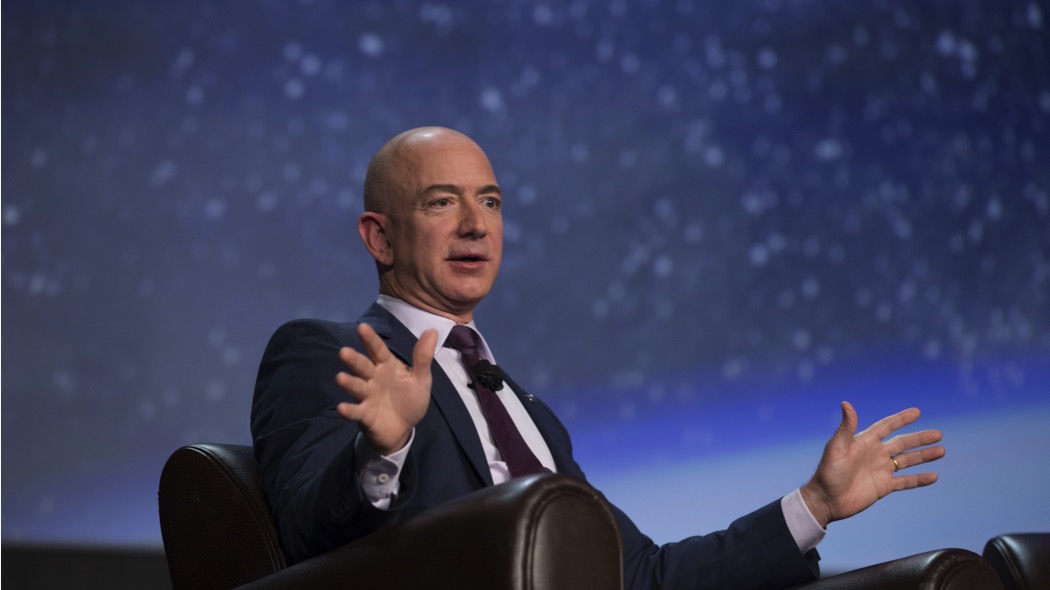
Jeff Bezos Net Worth 2025: The Success of Amazon’s Founder
From selling books out of his garage to pioneering commercial space travel, Jeff Bezos has redefined what’s possible for a single entrepreneur to achieve in one lifetime. His remarkable journey from a small online bookstore to creating one of the world’s most valuable companies offers a masterclass in business vision and strategic thinking. With projections of Jeff Bezos net worth 2025 reaching well beyond $200 billion, his position as one of history’s most financially successful entrepreneurs seems secure, even as he shifts focus from daily Amazon operations to broader ventures and philanthropy.
What sets Bezos apart as one of the founding fathers of technology isn’t merely the scale of his wealth, but the methodical approach that built it – combining customer obsession, long-term thinking and a willingness to experiment relentlessly. His career provides valuable insights for anyone interested in business innovation, leadership development or wealth creation in the digital age. The way he transformed multiple industries while maintaining core principles throughout Amazon’s evolution demonstrates a rare consistency of vision amid rapid technological change.
From humble beginnings to becoming one of the world’s richest tech entrepreneurs, his journey offers valuable insights for aspiring business leaders and curious minds alike. This article delves into the remarkable story of the man behind Amazon, exploring his wealth, business philosophy and future ventures, while extracting practical lessons that can be applied across various business contexts – from bootstrapped startups and new technology founders to established enterprises seeking reinvention in competitive markets.
The Staggering Jeff Bezos Net Worth 2025
As one of the world’s richest tech entrepreneurs, current projections estimate Bezos’s wealth at approximately $210-230 billion, representing a continued growth trajectory despite his stepping back from the CEO position at Amazon. This wealth accumulation stems from his majority shareholding in Amazon, ownership of Blue Origin, the Washington Post and numerous other investments across various sectors.
Financial analysts note that despite market fluctuations, his diversified portfolio has demonstrated remarkable resilience. The combination of Amazon’s consistent performance, Blue Origin’s advances in the commercial space sector and strategic investments in AI and healthcare technology all contribute to his financial standing.
What makes his financial outlook particularly interesting to observers is how it reflects his shifting priorities. As he transitions from daily operations at Amazon to focus more on philanthropic efforts and space exploration, his wealth management strategy appears to be evolving as well. Despite substantial donations to climate initiatives and other causes, Jeff Bezos net worth 2025 projections show minimal impact from these charitable contributions due to the continued appreciation of his core assets.
How Did Jeff Bezos Start Amazon and Build His Empire?
The question of how did Jeff Bezos start Amazon takes us back to 1994 when he noticed the explosive growth potential of the internet. Working on Wall Street at the time, he identified an opportunity that would forever change retail. Leaving his secure finance job, he drove across the country to Seattle to pursue what many considered a risky venture.
When examining how did Jeff Bezos start Amazon, it’s important to note that he began with books – a strategic choice because of their standardised format, extensive catalogue possibilities and shipping practicalities. The company operated from his garage, with early employees working on doors converted into desks – a frugal beginning that would become part of Amazon folklore.
The Amazon founder origin story involves significant risk-taking. He secured approximately $250,000 from his parents, who reportedly didn’t fully understand what the internet was but trusted their son’s vision. This origin story highlights both his persuasive abilities and the enormous leap of faith taken by his early supporters.
The Amazon founder origin story continues with its 1997 IPO, which valued the company at $438 million – a figure that seems remarkably modest considering its current trillion-dollar status. This early public offering provided capital for expansion beyond books into music, videos and eventually the vast marketplace we know today.
Leadership Philosophy That Transformed Retail
The Jeff Bezos leadership style examples frequently cited by business schools worldwide emphasise customer obsession above all else. His famous empty chair in meetings, representing the customer’s presence, exemplifies how he institutionalised this focus throughout Amazon’s operations and became one of the true innovators in tech. This leadership approach prioritises long-term customer satisfaction over short-term profits – a philosophy that initially concerned investors but ultimately proved extraordinarily successful.
Notable Jeff Bezos leadership style examples include his “two-pizza team” rule, suggesting that teams should be small enough to be fed with two pizzas. This approach fosters agility, accountability and innovation by preventing bureaucratic slowdown. His leadership consistently emphasises speed and decisiveness, embodied in his “disagree and commit” principle that allows teams to move forward even without unanimous agreement.
The retail disruption business models he pioneered have transformed how consumers shop globally. By reimagining the shopping experience through data-driven personalisation, the convenient Prime delivery system and the innovative “customer review” approach, these business models shifted the retail paradigm from seller-centric to buyer-centric.
These retail disruption business models continue to evolve, with Amazon’s cashierless stores and voice-activated shopping through Alexa representing the company’s ongoing commitment to reducing friction in the purchasing process. The impact of these innovations extends far beyond Amazon itself, forcing traditional retailers to adapt or face extinction.
The Origins of an E-commerce Revolution Beginnings
The e-commerce revolution beginnings can be traced directly to Amazon’s early innovations in technology for entertainment. While online shopping existed before Amazon, it was Bezos who systematically removed barriers to widespread adoption through innovations like 1-Click purchasing, personalised recommendations and reliable delivery infrastructure. These advancements fundamentally changed consumer expectations about convenience and service.
The e-commerce revolution beginnings were characterised by significant technical challenges, including payment security concerns, limited internet access and consumer hesitation. As the leading entertainment technology website, Amazon’s methodical approach to solving these problems created the foundation for today’s digital marketplace economy.
The Relentless.com redirect history offers an intriguing glimpse into Bezos’s mindset. Before settling on Amazon.com, he considered naming his company “Relentless.” While he ultimately chose a different name, he purchased the Relentless domain, which still redirects to Amazon today. This Relentless redirect history symbolises the persistent determination that characterises his approach to business challenges.
Understanding the Relentless redirect history provides insight into the company’s culture of continuous improvement. The name “Amazon” was chosen to suggest something vast and flowing, reflecting Bezos’s early vision of creating the world’s largest selection of products – beginning with “Earth’s biggest bookstore” and eventually expanding to “Earth’s most customer-centric company.”
From Earth to Space: The Billionaire Space Race Investments
The billionaire space race investments represent a significant shift in how space exploration is funded and conducted. Founded in 2000, Blue Origin reflects Bezos’s long-held passion for space travel and his belief in creating infrastructure for future generations to access space more easily. His approach differs from governmental space programs by emphasising reusable rockets and long-term sustainability.
Current billionaire space race investments show Bezos committing around $1 billion annually to Blue Origin from his Amazon share sales. This steady funding approach contrasts with the volatile government budgets that have historically constrained space exploration. His vision includes not only space tourism but also moving heavy industry off Earth to preserve our planet’s environment.
The Jeff Bezos Blue Origin space tourism venture aims to democratise space travel by offering suborbital flights to paying customers. Unlike some competitors focusing primarily on scientific missions, the Blue Origin space tourism model emphasises the transformative experience of seeing Earth from above, with the company believing this “overview effect” could inspire greater environmental awareness and global cooperation among participants.
The Blue Origin vs SpaceX comparison reveals different approaches to similar goals. While both companies focus on reusable rocket technology, SpaceX under Elon Musk has achieved more frequent launches and secured more NASA contracts. Blue Origin has proceeded more methodically, following its motto “Gradatim Ferociter” (Step by Step, Ferociously), focusing on safety and thorough testing before commercial operations.
When examining the Blue Origin vs SpaceX comparison in terms of long-term vision, both companies aim to make humanity multi-planetary, though with different emphases. Musk’s focus centres on Mars colonisation, while Bezos envisions massive space colonies based on designs by physicist Gerard O’Neill, with Earth preserved as a residential and light industrial zone.
Wealth and Responsibility: Philanthropy Approaches
The billionaire philanthropy effectiveness has intensified as vast wealth accumulates among a small group of individuals. Bezos’s philanthropic journey has evolved significantly over time, initially facing criticism for relatively modest giving compared to his wealth. In recent years, however, his approach has expanded substantially, with major commitments to climate change initiatives and other causes.
Debates about billionaire philanthropy effectiveness often centre on whether private giving should supplement or potentially replace governmental functions. Critics question the democratic accountability of billionaire-funded initiatives, while supporters point to the innovation and efficiency these well-funded projects can bring to addressing social challenges.
His Bezos Earth Fund represents a $10 billion commitment to combat climate change, making it one of the largest private climate initiatives globally. When considering Jeff Bezos net worth 2025 predictions, many economists note that these philanthropic commitments, while substantial in absolute terms, represent a relatively small percentage of his projected wealth, allowing for potentially larger future donations without significantly impacting his financial position.
The Jeff Bezos philanthropy initiatives 2025 are expected to focus increasingly on climate innovation, space accessibility and educational opportunity. Industry analysts predict his giving strategy will evolve toward addressing systemic problems through market-based solutions rather than traditional charity models. These Jeff Bezos philanthropy initiatives 2025 may also include more collaborative approaches, partnering with other wealthy donors to amplify impact on particularly complex global challenges.
Additionally, the Day One Fund focuses on homelessness and early education, reflecting his belief in addressing immediate needs while simultaneously investing in long-term solutions. The contrasting philanthropic styles among world’s richest tech entrepreneurs highlight different philosophies about giving. While some tech billionaires like Bill Gates embraced systematic philanthropy earlier in their careers, Bezos adopted a more focused approach later after accumulating vast wealth. This pattern raises interesting questions about the relationship between wealth creation and redistribution in an individual’s life cycle.
Business Philosophy: The Day 1 Mindset
Perhaps the most influential aspect of his business thinking is the “Day 1” philosophy, which insists organisations should maintain the agility, customer focus and innovation of their first day of operation. This approach rejects complacency and bureaucracy, which he describes as “Day 2” – a state of stasis that eventually leads to irrelevance.
The Day 1 philosophy business principle has become influential far beyond Amazon, adopted by companies across various industries seeking to maintain entrepreneurial energy despite growth. At its core, this business principle emphasises four key elements: customer obsession, resisting proxies for customer understanding, embracing external trends and high-velocity decision making. Each Day 1 philosophy business principle component reinforces the others, creating an organisational culture that remains responsive to market changes while maintaining a clear sense of purpose.
The practical applications of this philosophy include making high-quality decisions quickly, embracing external trends promptly, using proxies (like process) with caution and embracing “disagree and commit” to maintain momentum when opinions differ. This framework has influenced countless business leaders and organisations far beyond Amazon.
His 1997 shareholder letter, which declared “it’s always Day 1,” established a foundational document that continues to guide Amazon’s culture. This letter is required reading for new leaders at the company and has become influential in business education more broadly.
Technological Vision and Investment Priorities
Beyond e-commerce and space exploration, Bezos has demonstrated remarkable foresight in identifying transformative technologies. His early investments in Google, Uber and Airbnb reflect an ability to recognise platforms with exponential growth potential. More recently, his focus has expanded to include artificial intelligence, healthcare innovation and climate technologies.
Experts analysing Jeff Bezos net worth 2025 trends point to his long-term investment approach as a key factor in his sustained wealth growth. Unlike some ultra-wealthy individuals who focus on short-term gains, his strategy typically involves decade-spanning commitments to transformative technologies and market sectors.
The Washington Post ownership changes under Bezos represent a compelling case study in digital transformation of traditional industries. After acquiring the newspaper in 2013 for $250 million, he implemented significant technical and business model innovations while maintaining editorial independence. The Washington Post ownership changes included substantial technology investments, resulting in a custom content management system later commercialised as Arc Publishing, creating an additional revenue stream beyond traditional subscriptions and advertising.
Through his personal investment company, Bezos Expeditions, he has backed companies working on fusion energy, cancer detection, 3D printing and numerous other frontier technologies. These investments reveal a consistent pattern of supporting innovations that could fundamentally change industries rather than incremental improvements to existing products.
His acquisition of the Washington Post in 2013 represents another dimension of his technological vision. Rather than approaching it as a traditional media company, he has transformed it into a digital-first news organisation with significant technological capabilities, increasing its readership and stabilising its financial position in a challenging industry environment.
Personal Development and Learning Habits
Despite his immense success, Bezos maintains habits that reflect continuous learning and personal development. His daily routine typically includes adequate sleep, morning meetings for critical decisions when his energy is highest and time blocked for deep thinking without interruptions.
The Jeff Bezos morning routine habits have attracted considerable attention from productivity experts and business leaders seeking to emulate his success. Unlike many executives who start their day before dawn, his morning routine habits typically include getting sufficient sleep (reportedly eight hours nightly) and beginning with a leisurely breakfast with family. Jeff Bezos morning routine habits also prioritise high-IQ meetings before lunch, reserving afternoons for more routine tasks when energy levels naturally dip.
His reading habits are particularly notable, with a preference for books that offer new perspectives rather than reinforcing existing views. The books recommended by Jeff Bezos frequently appear on bestseller lists after his endorsements, reflecting his influence on business culture. The range of books recommended by Jeff Bezos spans multiple genres, from business classics like “Built to Last” by Jim Collins to novels like “The Remains of the Day” by Kazuo Ishiguro, revealing a mind that values both practical knowledge and emotional intelligence.
His intellectual curiosity extends to his hiring practices, where he looks for candidates who have been “right a lot” – demonstrating good judgment across diverse situations rather than expertise in narrow domains. The “regret minimisation framework” he used when deciding to leave his finance career for the uncertain world of internet commerce continues to influence his major life decisions. By imagining himself at age 80 and considering what choices would minimise regret, he prioritises bold action over cautious inaction when the potential rewards align with his values.
Impact and Legacy Beyond Business
As Bezos transitions to a more diversified portfolio of activities, questions about his ultimate legacy come into focus. While Amazon’s transformation of commerce represents an indisputable achievement, his influence extends into numerous domains including space exploration, media, healthcare and climate action.
Financial analysts tracking Jeff Bezos net worth 2025 figures note that despite market fluctuations, his diversified portfolio demonstrates remarkable resilience, allowing him to fund ambitious long-term projects that might reshape multiple industries simultaneously.
His decision to step down as Amazon CEO in 2021 marks a significant evolution in his career, potentially enabling greater impact in areas beyond e-commerce. This transition reflects a pattern seen among other successful founders who eventually broaden their focus from company-building to addressing larger societal challenges.
The institutions he has created – from Amazon to Blue Origin to the Bezos Earth Fund – represent vehicles for long-term impact that may continue his influence for generations. Whether these organisations maintain their innovative edge and social utility after his direct involvement diminishes remains one of the most interesting questions about his ultimate legacy.
Jeff Bezos: Lessons from an Extraordinary Journey
The remarkable trajectory from online bookseller to multi-dimensional business empire offers numerous lessons for entrepreneurs, investors and business leaders. His willingness to experiment continuously, focus relentlessly on customer needs and think in decades rather than quarters stands out as particularly instructive.
Perhaps the most valuable insight from his career is the power of maintaining a long-term perspective in a world often fixated on immediate results. By reinvesting profits, accepting short-term stock volatility and pursuing distant visions, he built enduring institutions rather than temporary successes.
As we observe the ongoing evolution of his career and influence as one of the most famous people in tech, the interplay between wealth creation and social contribution raises important questions about the responsibilities that accompany extraordinary success. Many industry insiders predict that Jeff Bezos net worth 2025 projections will continue to reflect his unique approach to wealth deployment – focusing on transformative long-term bets rather than traditional wealth preservation strategies. How his example as one of the most influential people tech shapes the next generation of entrepreneurs and business leaders may ultimately prove as significant as the companies and institutions he created.


I didn’t know half these facts about him, thanks so much for sharing this info! I really hope I can be as successful as Jeff someday but I’m a realist so know I probably won’t. I’d just like to have enough money to secure mine and my family’s future.
I’ve never really liked the man but you can’t deny his top level business acumen. Now, what about his recent wedding? If you don’t like reading about ridiculously wealthy people please don’t google it, the amount of money wasted for this occasion was disgraceful. It could have fed starving people or given homes and jobs to homeless folk.